
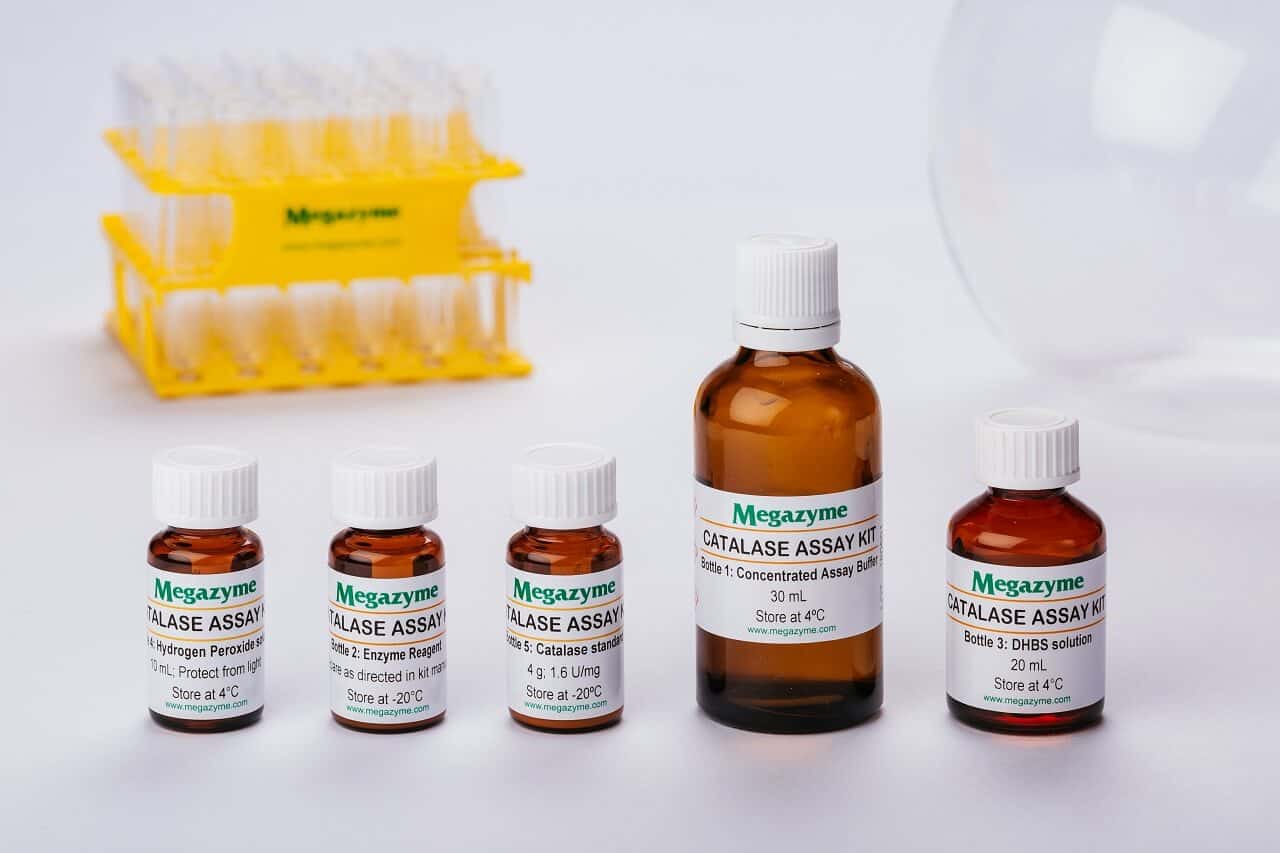
Catalase Activity Assay Kit, 100 a
Quality level: 200
Use: sufficient for ≥100 enzyme tests
Detection method: colorimetric
Sent in: wet ice
Storage temperature: 2-8 ° C
Genetic information: human … CAT (847)
General description
The Catalase Assay Kit contains all the components necessary to study catalase activity in various subcellular tissues and organelles.
Request
Suitable for colorimetric and UV tests
Biochemical / Physiological Actions
Catalase is a ubiquitous antioxidant enzyme that catalyzes the breakdown of hydrogen peroxide (H2O2) into water and oxygen. Hydrogen peroxide is formed in the eukaryotic cell as a by-product of various oxidases and superoxide dismutases. The accumulation of hydrogen peroxide in cells causes the oxidation of cellular targets such as DNA, proteins, and lipids, leading to mutagenesis and cell death. The removal of H2O2 from the cell by catalase provides protection against oxidative damage to living cells and its role in diseases related to oxidative stress has been extensively studied.
See this: This procedure provides instruction for the point of care personnel to use the Abbott’s Panbio SARSCoV-2 (COVID-19) Antigen test, a qualitative standalone rapid test. It is intended for the detection of viral antigen of SARS-CoV-2 from patient respiratory specimens.
Features and Benefits
- Useful for determining catalase activity; can be used on various tissues and cells
- Simple and optimized protocol: a simple colorimetric assay for the analysis of peroxisome enrichment and catalase activity
Suitability
Suitable for studying catalase activity in various subcellular tissues and organelles.
Beginning
This test method is based on the measurement of the hydrogen peroxide substrate remaining after the action of catalase. First, catalase converts hydrogen peroxide to water and oxygen (catalytic pathway) and then this enzymatic reaction is stopped with sodium azide. An aliquot of the reaction mixture is then analyzed to determine the amount of hydrogen peroxide remaining by a colorimetric method.
The colorimetric method uses a substituted phenol (3,5-dichloro-2-hydroxybenzenesulfonic acid), which is coupled oxidatively to 4-amino antipyrine in the presence of hydrogen peroxide and horseradish peroxidase (HRP) to give a quinone imine red dye (N- (4-antipyrine) -3-chloro-5-sulfonate-benzoquinone-monoimine) which is absorbed in 520 nm
Definition of unit
One unit of catalase will decompose 1.0 micromole hydrogen peroxide to oxygen and water per minute at pH 7.0 at 25 ° C at 50 mM hydrogen peroxide substrate concentration.
Preparation note
Use ultrapure water in the preparation of all solutions.